A Lejacie professional archetype
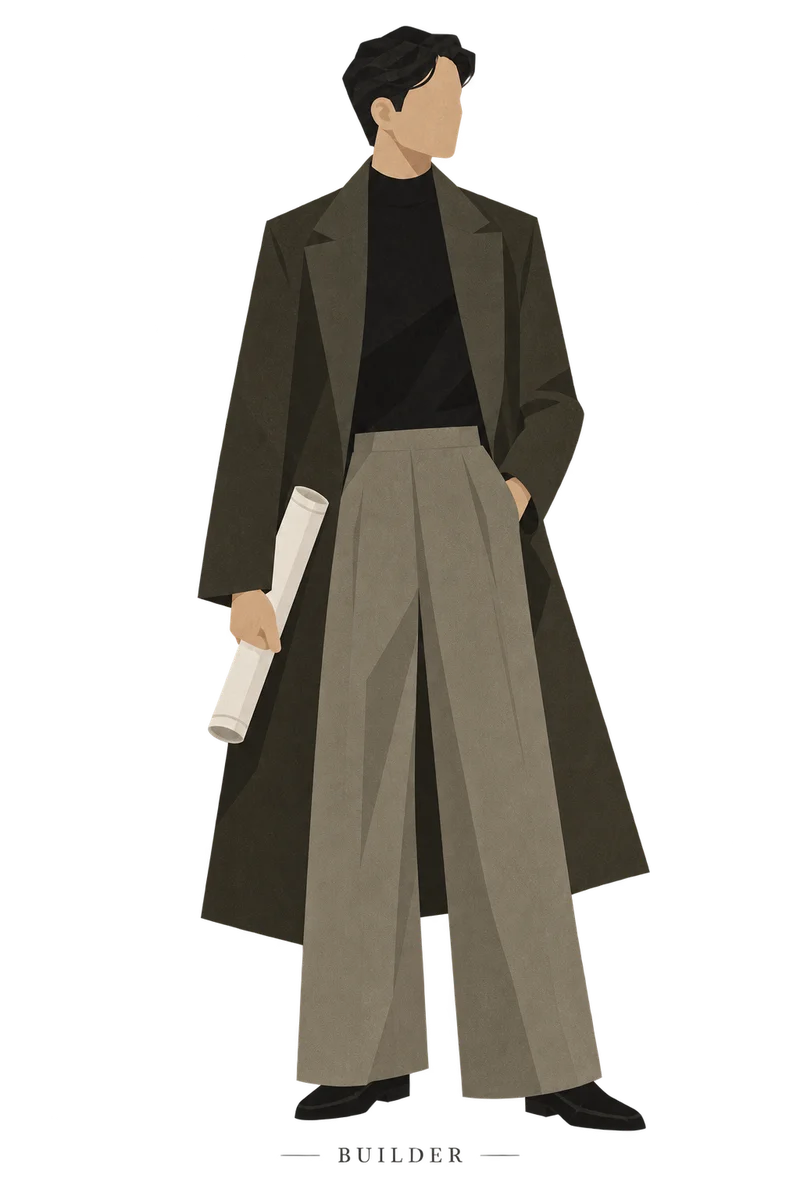
The Builder
Turns intention into systems, services, processes and delivery that work in real life.
You may be a Builder if you keep asking:
“Who owns this, what happens next and how will this work when things get busy?”
You may notice bottlenecks, unclear ownership, dependencies, missing processes and implementation risk.
What you may notice first
Bottlenecks, dependencies, unclear responsibility, missing processes, implementation risk, timing, resources and whether work is actually happening.
What you may do unusually well
- Implementation sequencing
- Operational judgement
- Project and program control
- Process embedding
- Reliable follow-through across multiple actors
Productive difficulty
The kind of hard work that may suit you.
Complex delivery where many moving parts must align and failure has practical consequences.
What makes the effort worthwhile
Completion, reliability, visible functioning, practical usefulness and turning plans into reality.
Costly friction
Work you may be able to do, but may not want to centre.
You may become depleted by:
- Endless abstract debate with no implementation
- Constant redesign without authority to stabilise
- Unclear ownership
- Work that values ideas but not execution
- Being handed impossible delivery without resources
This does not mean you cannot do those things.
It means a role built mostly around them may underuse your strongest contribution.
Career families to explore
A Builder pattern may show up across: Programs, projects and service delivery; implementation policy; legal operations; project management; transformation; process improvement; service operations; quality and safeguarding; product and service design.
Broad pathway zones:
- Program and project delivery
- Legal operations and legal project management
- Implementation policy and service reform
- Transformation and operational consulting
- Compliance embedding and control implementation
- Product, workflow and service operations
The families it connects to most often: Programs/projects; legal operations; implementation; process embedding; delivery consulting.
The setting matters. Thrives where authority, resources and accountability are aligned. The same role becomes destructive where the Builder is expected to compensate for chronic organisational dysfunction.
Role shape and progression
Likely role shapes. Project lead, program manager, implementation director, operations lead, transformation manager or delivery consultant.
What seniority can add or remove. Management may fit where it remains connected to systems and delivery. Executive roles fit when authority matches accountability and the person wants continuous operational ownership.
The high-capability, high-cost trap
Becoming the person who rescues every broken project and carries responsibility that should be shared.
More than one pattern can be true
Common blends
- With The Strategist: stronger diagnosis and redesign before implementation.
- With The Adviser: stronger controls, reliability and compliance orientation.
- With The Facilitator: stronger adoption, co-design and people-centred implementation.
The Builder is rewarded by making the solution function. The Strategist is rewarded by identifying the right solution and model.
How to test the pattern
Try one low-risk experiment:
Choose a process you know. Map each step, owner, handover and failure point. Redesign one step so it could survive a busy day.
Notice how the work feels: your focus, learning speed, energy, frustration and desire to keep going.
The goal is not to prove that you are “a Builder.”
It is to gather evidence about whether this type of work brings out your best.
A pattern is not a verdict
The Lejacie Professional Archetypes are reflective work patterns, not diagnoses, fixed identities or career instructions.
The full quiz is designed to consider secondary influences, practical conditions, current career stage, exposure, confidence and pathway evidence.