We’re creating a world where law, policy and professional expertise speak human.
Lejacie is an independent lab focused on research, learning, and innovation. We dig into the gaps where legal or regulated information lets people down. Then, we make that knowledge clear and useful. We bring together the experts who hold it, set higher standards for sharing information safely, and help know-how actually get to the people who need it, as well as the professionals working for them.
Curious? Dive into our research.
Explore the researchThe gaps we’re focused onHow we close them
We’re tired of watching good information get buried in a 60-page PDF, never really making a difference for anyone.
The law’s on the books. The policy’s official. The report’s out there. But someone still has to figure out if it matters to them, how they can use it, and what to do next, usually while they’re exhausted, distracted, and juggling a bunch of other problems.
Most people just ask
“Was it published?”
We ask
“Did it actually help when someone needed it?”
What drives us
Making sure legal and regulated advice finds its way to the people who need it most, and beats out misinformation, AI-generated noise, and the loudest wrong answers. It deserves better than to sit forgotten in a PDF nobody touches.
Picture this
Picture this: you get a letter from a court, a government office, an insurance company, a school, lawyer, hospital, whoever. The letter says something that actually matters. Maybe there’s a deadline, a risk, a right, or some next step you need to take.
The words go like this:
“You may be eligible. Your circumstances may affect the outcome. We cannot guarantee the result. You should seek independent advice. Time limits apply.”
All technically correct. And that’s exactly what’s wrong.
All over law, government, research, anywhere rules and rights are supposed to protect you, you can find guidance that’s perfectly accurate, fully published, official in every way. But for the person it’s meant to help, that “correct” information just falls flat. The gap between what’s on paper and what actually helps someone in real life is where things break down.
Ref 2026/004871 · Page 1 of 60
Important information about your matter
- You may be eligible.am I?
- Your circumstances may affect the outcome.how?
- We cannot guarantee the result.then what?
- You should seek independent advice.with what money?
- Time limits apply.which ones?!
The gaps we’re focused on
What are these gaps?
- The first one
The Paper-to-Person Gap
The law’s there to protect you, but the way it’s written, it can turn into a barrier instead. The right might exist, and there’s guidance for days, but the way it’s laid out feels like it’s written for someone who already knows the whole system. The person who needs help gets the letter, reads it again and again, and still can’t figure out if it even applies to them, what to do, or how to get started. We’re focused on closing the gap not by checking if information exists, but by making sure someone can actually use it.
Read about this gap - Then there’s
The AI-to-Human Gap
In a country where only 8% of households qualify for legal aid, turning to an AI for help is often the only real choice. The question isn’t “should they?” They already do. It’s about making that help good enough, knowing when AI can truly help, when it needs to stop, and when it’s time for a real human to step in. Our work here is about making sure that moment, where an AI spits out a confident answer, doesn’t turn into a dead end. We want AI to widen access, not just sound smart.
Read about this gap - And the third gap
The Silo Gap
The law tries to cover a massive landscape, but it doesn’t always speak the language of other professions. You end up with a person who’s split between health, education, and legal systems, telling their story again and again, mending breaks they never caused. We’re out to break these silos and connect the dots, so the different systems actually work together instead of leaving the person to tie everything together themselves.
Read about this gap
What the evidence says
88%
of Australians surveyed agreed “the legal system is too complicated to understand properly.”
78%
In Victoria, nearly 78% of people with a legal need had that need unmet.
Meet Maya
Meet Maya
1 of 5
This is what all those gaps look like when they land in someone’s real life.
Maya isn’t a real person (she’s a mix of many), but she could be anyone reading that letter. She’s 34, has two kids, and just left Daniel. He controlled everything: money, her phone, her reputation. She needs a way out: safety, housing, money, school arrangements, a job, everything, right now.
2 of 5
It’s late. The kids are asleep. Maya sits on a phone that probably isn’t really hers, running low on battery. She types: protection order. Can he see my searches? Leaving the lease. School pickup without him. Free lawyer. Is this family violence?
3 of 5
She lands on websites. She reads the key lines: “May be eligible. Circumstances may affect the outcome. Seek independent advice. Time limits apply.”
4 of 5
Every phrase, technically right. Still, Maya is left not knowing if any of it applies to her, what she’s supposed to do next, or if making a call tonight will make tomorrow worse. The institutions might point out, “We published the information.” But it’s Maya who’s left holding that letter, alone.
5 of 5
Maya isn’t careless. She’s scared, rushed, missing the paperwork, not sure what things are even called. An expert reading the same page would know which facts matter, how urgent it is, and what to do if the first plan fails. Maya can’t read their minds.
Follow Maya’s path through all three gapsHow we close these gaps
How we close them

Find
Finding where law and policy break in practice
We follow what happens after the law, policy or report leaves the page, and look at exactly where, from paper to person, it went wrong: where meaning dropped out, where the handover broke, what got missed, and where someone fell through even though the document existed.
From that, we do two things: we recommend how the law, policy or report itself should change (what to add, adapt or update) and, because recommendations don’t always get implemented, we work out what a professional could actually do about it on a Tuesday, in real conditions, right now.
Where this lives on Lejacie
- After the LawOur article series. It follows law, policy, inquiry findings, reforms and public protections beyond publication.
- The gaps we work to closeThree gaps, one life: meet Maya.
- Maya’s pathwayThis isn’t some referral flowchart. It’s what happens after you ask for help.
- Our method and where we lookWhen knowledge gets stuck, the signs are scattered in places nobody lines up and reads together.

Define
Making regulated information usable
We’re working to define what it takes for regulated information to stay accurate and properly bounded while a real person can still understand it, trust it, and act on it, written from what they don’t know and the state they’re in, not from what the expert already knows.
This is the Paper-to-Person work, and the Safe to Say, Safe to Reach, Safe to Use standard that comes out of it.
Where this lives on Lejacie
- Safe to Say, Safe to Reach, Safe to UseOur standard: a way to close the gap between paperwork and real people, so expertise actually lands.
- The Paper-to-Person GapCorrect enough to publish, not usable enough to live with.
- The 4:47pm TestWould this still work for a tired person on an ordinary Tuesday, with something missing?
- The AI-to-Human GapAn answer isn’t the same as real support.

Translate
Getting stuck knowledge into the hands of the people who need it
So much of what people need is already known. It’s just trapped in reports, research, people’s heads, conference rooms, and new laws and policies, where the people it could help can’t reach it.
We get that knowledge out: we find what’s stuck, work out who actually needs to understand it, and translate it into something they can grasp, trust and act on, without losing what matters.
Where this lives on Lejacie
- LegalLensOur practice-intelligence publication. What changed, and what does it change on Tuesday?
- ReportsInvestigating deeply: question, methodology, dataset, findings, limitations, implications.
- Theory of changeReform has to cross the Paper-to-Person Gap twice: from paper to the professional, then from the professional into someone’s real life.
- Our articlesThe recent conversations we’ve been having, and a way to subscribe.

Connect
Connecting professions and shaping their future
One person’s life doesn’t split neatly into separate professions, and no single one can close the gap alone. We bring together the people who each hold a piece (legal, frontline, research, design and lived experience) to connect what they know and work across the silos.
And in an age of AI, misinformation and collapsing public trust, we hold honest conversations about what these jobs need to become and the skills we need to build, so expertise stays usable, judgement stays accountable, and it works for both the people doing the work and the people who need their help.
Where this lives on Lejacie
- Lejacie LabsCross-sector working groups that tackle the stuff everyone notices but nobody owns.
- Professionals From the FutureWhat the professions we rely on should become next.
- Professional ArchetypesA job title rarely tells the whole story. Find the kind of work where you make your strongest impact.
- The Silo GapOne life, many pieces.
- Field mapMany established fields improve an important part of the same problem. Where we sit between them.
The Framework
Safe to Say, Safe to Reach, Safe to Use
Most information gets checked for one thing: accuracy. That matters, but it isn’t nearly enough. Perfectly “correct” information fails people every day, because it’s ignored, too complex, or straight-up unsafe to rely on.
We don’t just ask, “Was the info published?” We ask, “Could a real person actually use it, when it really matters?” That means three things have to be true, all at once:
- 01 · Defensible
Safe to Say
Safe to Say means the info is defensible. Built by legal and professional experts, it’s accurate, sourced, qualified, and inside the rules. This is the layer where someone stands behind the information: it’s the difference between an answer and an answer you can count on. Most public info never even gets this right.
- 02 · Lands
Safe to Reach
Safe to Reach means the info actually lands. Grounded in behavioural science, this is about whether the words reach someone dealing with life: tired, in a rush, juggling three problems. It’s not about access: it’s about whether you’ll read it, trust it, and feel like it’s meant for you.
- 03 · Action
Safe to Use
Safe to Use is about action. Built on human-centred design, it means a person can actually use the advice. Can they understand it, make a decision, take a next step? Does it tell them clearly when it’s time to call for more help, especially when their only “helper” is AI?
Why all three?
Because a person under pressure makes three decisions in a split second: Is this true? Is it about me? And what do I do now? Miss one layer, and everything falls apart. Info can be correct, but unreachable. Reachable, but useless. Usable, but just plain wrong. The framework holds all three together, merging legal defensibility, behavioural insight, and good design into a single, tough standard for expertise that’s actually safe to rely on.
Safe to Say, Safe to Reach, Safe to Use is still in development (Draft v0.1), and we’re testing it. Think of it as a way to make regulated expertise usable, not a seal of approval or a replacement for real legal advice. But in a world where people rely on information, and each other, more than ever, these layers aren’t optional. They’re what makes law and policy actually live.
Our articles
Check out the recent conversations we’ve been having.
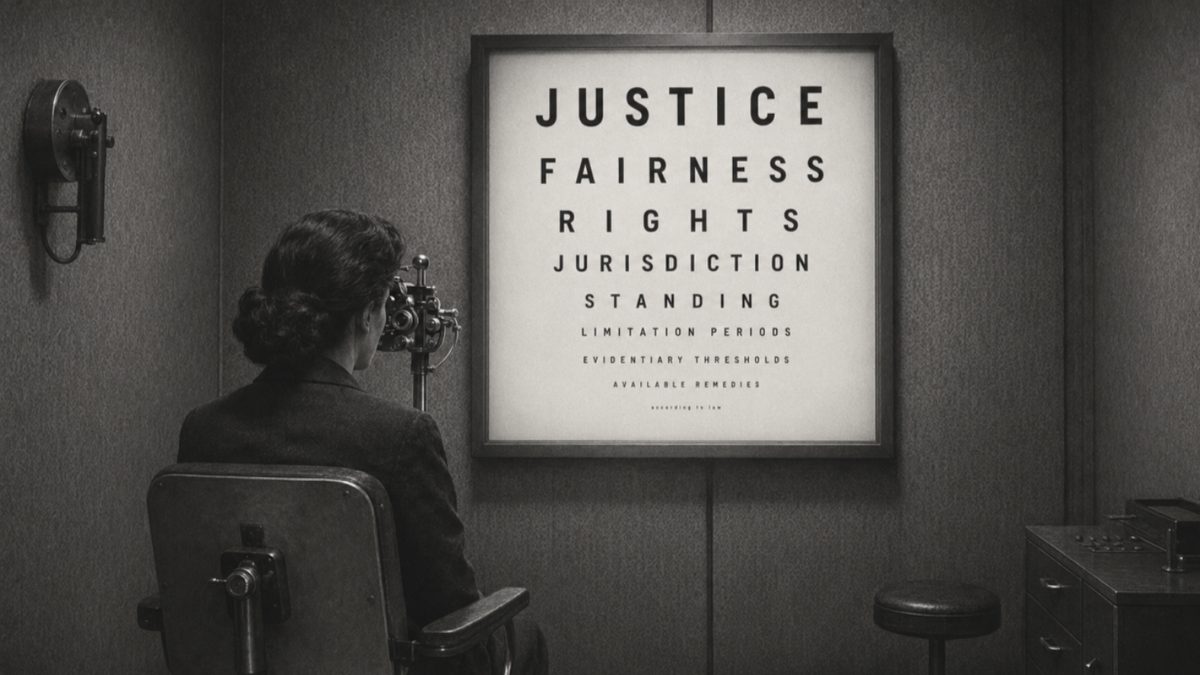
AI · Public legal understanding
AI Is Hallucinating the Justice System We Told People Exists

AI · Courts and self-represented litigants
She Couldn’t Afford a Lawyer. The Court Punished Her for Using AI.

Law and usability
The Law Was Written to Be Followed, Not Understood (And Plain English Isn’t Going to Fix That)
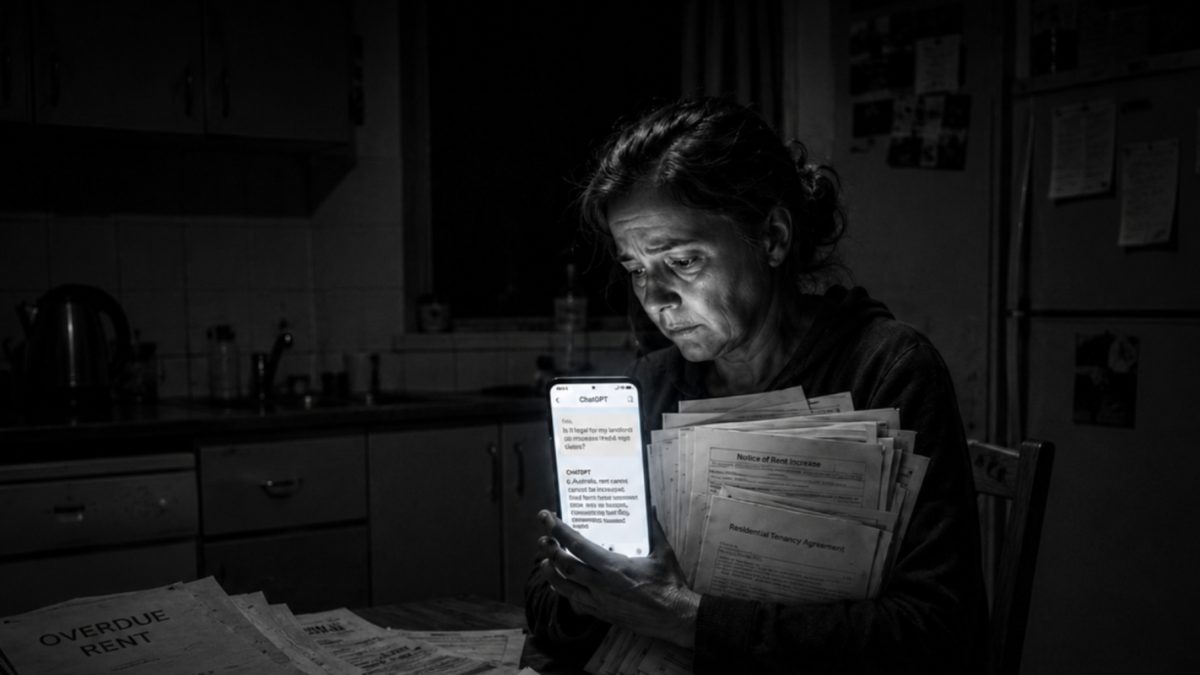
Future of the legal profession · AI
The Legal Profession Left a Gap for 92% of Australian Households. So ChatGPT Became the Largest Legal Aid Provider. Now What?
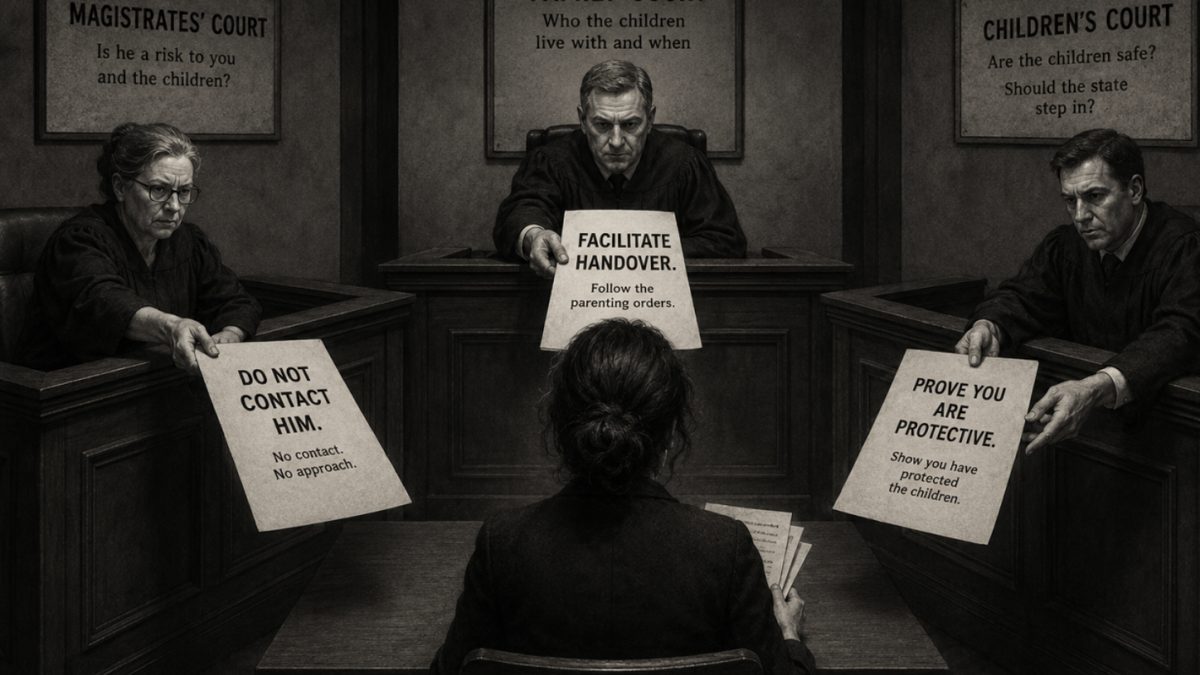
Family law · Courts
She Left. Now She’s in Three Courts, and She Wants Out of Those Too.
Subscribe to After the Law and LegalLens
New investigations and practice intelligence, straight to your inbox. LegalLens tracks law, regulation, policy, judgments, research, professional standards, AI and public expectations.
Building in public
The frameworks and tools we are building in public
- The framework
Safe to Say, Safe to Reach, Safe to Use
The standard for legal, policy and professional knowledge that is safe to say, safe to reach and safe to use.
Read it - The anatomy
What good legal information actually looks like
One resource taken apart: the twelve parts it needs so a real person can find it, understand it and take a safe next step.
Read it - Rewrites
From legalese to safe to use
Classic legal writing broken down one layer at a time, and what absolutely can’t change.
Read it - The stress test
The 4:47pm Test
Does expertise really work when life gets messy?
Read it - Handovers
A referral isn’t the same as a handover
And a disclaimer doesn’t count as a plan.
Read it - For workers
Legal information or legal advice?
What you can safely explain, when you should stop, and how to make sure the person actually gets the help they need.
Read it - The AI-to-human gap
When AI is the only lawyer people can reach
Where the line sits, and what has to be true for AI legal help to be safe to use.
Read it
Who this is for
Lejacie is for people who see the gap, and can’t ignore it anymore.
You work in law, justice, or public service. You notice the difference between what’s officially required and what actually makes sense to someone trying to live their life. You’re right in the middle of law, policy, safety, technology, and the messiness of everyday reality. You want to give clear, careful advice, but that balance? It shouldn’t feel like an impossible choice.
Who are you?
You might be a lawyer, an educator, someone on the frontline, leading a team, running research, shaping policy or reform, working as a regulator, or building digital or AI tools for the public sector.
Where do you work?
Legal aid agencies, courts, child and family safety organisations, disability and healthcare, community or legal support, government, regulatory bodies, universities, or social services: wherever people serve the public and go up against complicated systems.
And who is all this really for?
The people at the heart of these systems. People whose lived experience isn’t just a “box to tick;” it’s a source of truth. They’re the ones who show where the information doesn’t land and where the process breaks.
If you’re determined to make public-serving knowledge something people can actually use, welcome. You belong here.
Students and early-career people: start with the Archetypes if you are trying to see the work as it is, not only as it was advertised.
The future we are working towards
A future where law, policy, research, and professional skill actually work when it counts, not just on the page.
Where professions meant to serve the public are honest enough to see the whole story of someone’s life, equipped enough to help, and clear about where their job ends and others begin.
We’re not aiming for easy, every step of the way. Some processes need care, limits, and patience. Things like privacy and consent really matter. Complexity isn’t always bad, but people shouldn’t have to suffer through avoidable confusion. Keep the true safeguard. Ditch the pointless red tape around it.
What does that look like?
People don’t have to repeat their story, drag folders from service to service, or fix a path that was supposed to hold.
A referral means someone stays responsible for what’s next, not just handing out another number.
Law, policy, research, and safety info are clear, reachable, and actually usable by the people who count on them.
Professionals have the time, space, trust, and support to use their judgement, not just grind through a process.
Systems are shaped by lived experience and frontline know-how, not only theories or wishful thinking.
AI helps real humans connect with good support and never becomes a slick dead end.
Professions work together without losing sight of who’s responsible, or where privacy and safety lines run.
Hard-won judgement and wisdom get handed on. They don’t leave when someone retires.
New people walk into fields that value curiosity, teamwork, and practical care just as much as technical smarts.
In one line
People don’t have to hold broken systems together by themselves, and professionals actually have the tools to make the next step work.
Knowing was never the point. Being able was always the point.
Who’s behind it

Meet Chami
Chami Rupasinghe is the founder of Lejacie and an admitted Australian lawyer (non-practising).
For almost a decade, she has worked in the space between what professionals know and what people can actually use, especially when the knowledge comes from law, legislation, policy or research.
Chami founded Lejacie because she did not think those were the only choices: a confident answer that misleads, or a careful answer that leaves someone stuck.
Chami does not provide individual legal advice or representation.