Lejacie presents
Professional Archetypes Quiz
The job title is not the whole story.
Find the pattern underneath the work: what you notice, how you contribute when things get complex, the kind of difficult work that may bring out your best, and what may be costing you more than it should.
Find your archetypeExplore the career map
For law, policy and adjacent professional work · About 15–20 minutes · Not a personality test
This quiz offers career hypotheses for exploration. It is not a psychological assessment, a hiring tool or a verdict on what you can do. Your result may change as your experience, confidence, opportunities and work conditions change.

We study what professional practice needs next.
The professions are changing.
AI can already retrieve, summarise and generate information at extraordinary speed. That makes the next layer of professional work more important: interpretation, judgement, explanation, responsibility, ethical reasoning, implementation, navigation, and knowing when an answer cannot safely be generalised.
Lejacie studies the emerging capabilities, roles and ways of working that will shape the future of legal, justice and other regulated professions.
We look at what is changing, talk to people already practising differently, identify the patterns, and turn that research into practical ways for professionals to notice what matters, judge what can be relied on, explain complexity, decide well and act responsibly.
We are interested in versions of professional practice that are both more sustainable for the people doing the work and more useful for the people relying on them.
The Professional Archetypes










- The Future Professional Capability MapEmerging research into the capabilities professionals need after “What is the law?”, “What does the policy say?” or “What does the evidence show?”
- Professionals From the FutureConversations with people already working in ways that point to where their professions are heading.
- Professional Archetypes + Career MapResearch into the different forms professional contribution can take, including the work that sits between traditional disciplines and job titles.
- ResourcesPractical tools, guides and learning resources developed from the research.
Your result includes
- Your primary Professional Archetype. The recurring contribution your work may be built around
- Your meaningful secondary influence. Only where a second pattern changes how you create value
- Your productive difficulty. The kind of hard work that may make you more capable, not just more tired
- Your costly friction. Work you may be capable of but should not automatically centre
- Broad career zones. Where this pattern may have real value, not a single prescribed job title
- A next question. The most useful thing to investigate, test or redesign before your next move
This is not a label to live inside.
It is not a test of intelligence, confidence or employability.
It is not a promise that one archetype equals one career.
It is not a hiring tool.
It is a way to see the recurring pattern underneath the roles you have held, and make a better next decision from there.
Your career is more than a job title.
You may know you belong somewhere in law, policy, research, public service, safety, rights, governance, technology or community work.
That does not automatically tell you what kind of work will bring out your strongest contribution.
You may be capable in your current role and still feel misaligned.
You may be good at work that costs you too much to sustain.
You may care deeply about a field but not know which version of that field fits you.
You may want seniority, influence or better pay, but not know whether the conventional next promotion would actually move you closer to the work you do best.
The Professional Archetypes Quiz is built for those questions.
It is a research-informed, scenario-led career assessment for people exploring law, policy and adjacent public-serving careers.
It does not begin with a job title.
It begins with how you work.
The question underneath the question
“What kind of professional work am I actually built to do well?”
Most career advice begins with one of two questions:
- What are you interested in?
- What job title do you want?
Those are useful questions. They are not enough.
Two people can both be interested in policy, law, research, community work or technology, and thrive in entirely different versions of it.
One may be energised by evidence reconstruction and careful findings. Another may come alive when they can build a coalition around reform. Another may be strongest when turning difficult information into something people can use. Another may see the hidden process failure and want to redesign it.
The same title can mean very different work.
The quiz is designed to help you identify the recurring professional pattern underneath the title:
- What you notice first.
- What your mind instinctively tries to do with a difficult problem.
- What kind of challenge brings out your best work.
- What outcome makes the effort feel worthwhile.
- What you can do well but may pay too high a cost to do all the time.
- What conditions help, or block, your strongest contribution.
Your archetype is not a label
It is a work pattern.
A professional archetype is a memorable name for a recurring pattern of contribution.
It is not a personality type, diagnosis, permanent identity or prediction of your future.
It does not tell you that you can only do one kind of role.
It helps you form a more useful hypothesis:
This may be the kind of difficult work I am most likely to do well, find meaningful and sustain, if the conditions are right.
| An archetype can help you explore | An archetype does not decide |
|---|---|
| What kind of problems you repeatedly notice | Your intelligence, personality or worth |
| How you tend to create professional value | Your one “perfect” job |
| What work may feel difficult in a good way | What career you are destined to have |
| What conditions may help you thrive | Whether you are qualified for a regulated profession |
| What work you may be good at but should not centre | Whether you can succeed in a role |
| Career families and pathways worth testing | What you must do next |
The 11 professional archetypes
Eleven recurring ways people create value in complex work.
| Archetype | Underlying work pattern |
|---|---|
| The Adviser | Makes complex rules, risks and obligations usable, defensible and safe for decisions |
| The Strategist | Finds the mechanism behind recurring failure and designs what needs to change |
| The Advocate | Builds and advances a position under opposition, scrutiny or conflict |
| The Investigator | Reconstructs what happened and reaches findings that can be defended |
| The Navigator | Moves complex decisions through timing, relationships, influence and power |
| The Facilitator | Helps people understand, participate, resolve and move forward together |
| The Builder | Turns intention into systems, services, processes and delivery that work in real life |
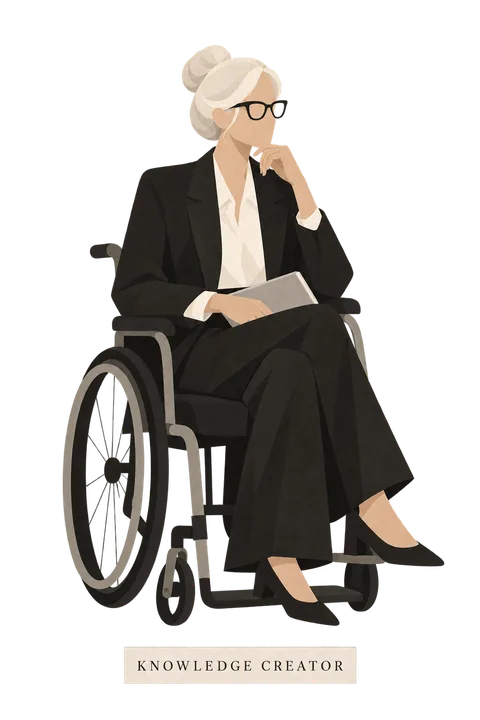
| The Knowledge Creator | Produces rigorous understanding that did not previously exist |
| The Translator | Makes complex knowledge understandable, compelling and usable for a real audience |
| The Guardian | Protects people where the consequences of systems are immediate |
| The Reformer | Moves law, policy or institutions toward a principle, right or social good |
You may have one clear primary archetype. You may have a meaningful secondary influence. You may have a blended pattern. You may need more exposure before a pattern becomes clear.
All of those are valid outcomes.
What the quiz explores
Not what you say you are. What you repeatedly do with a problem.
The quiz uses scenarios and trade-offs rather than asking you to rate yourself as “analytical,” “strategic” or “empathetic.”
It explores:
| Area | The question underneath it |
|---|---|
| Natural attention | What do you notice first when a situation becomes difficult? |
| Default contribution | What does your mind instinctively try to do with the problem? |
| Motivational reward | What outcome makes effort feel worthwhile? |
| Productive difficulty | What kind of hard work stretches you in a good way? |
| Costly friction | What demands consume disproportionate energy, even when you perform well? |
| Ways of working | What pace, structure, autonomy, stakeholder contact and recovery conditions help you do your best work? |
| Practical reality | What matters in your real life: income, location, flexibility, study, security, care responsibilities or risk tolerance? |
| Recurring evidence | What do people seek you out for, what patterns recur across settings and what exposure have you actually had? |
The quiz is designed to distinguish between:
- Work you enjoy.
- Work you can do.
- Work you may do unusually well.
- Work you can do well but should not build your entire career around.
- Work you have not had enough exposure to judge yet.
From archetype to real decisions
Recognition is only useful if it changes what you do next.
The quiz will not stop at a flattering description.
Your result is intended to help you explore:
- Career families that may fit your strongest pattern.
- Specific pathways worth investigating.
- The sectors and organisation types where the work may look different.
- The difference between a title and the actual day-to-day role.
- Conditions likely to make a role sustainable or costly.
- What progression may add or remove from the work you enjoy.
- Job-ad signals and interview questions to look for.
- Low-risk career experiments before making a large move.
- What to build, test, redesign or stop forcing next.
The eventual map is not:
“You are this type. Go get this job.”
It is:
“This is the kind of contribution your responses suggest you may make well. These are the places it may matter. These are the conditions to test. This is the evidence you still need.”
Built for careers that do not fit one ladder
A degree is a starting point. A title is not the whole career.
The quiz is built for people exploring work across:
- Law, legal practice and access to justice.
- Public law, policy, government and regulation.
- Politics, public affairs and stakeholder strategy.
- Compliance, governance, integrity and risk.
- Investigations, enforcement and oversight.
- Community, rights, advocacy and social impact.
- Programs, projects, service delivery and implementation.
- Legal operations, systems, innovation and service design.
- Business, consulting and commercial advisory.
- Research, writing, academia and evidence.
- Communications, education and knowledge translation.
- People, workplace, learning and organisational roles.
The tool is designed around the work, not only the degree.
You may come from law, social work, psychology, nursing, allied health, education, public policy, research, data, design, communications, business, community development, criminology or another starting point entirely.
Some pathways require admission, registration, accreditation, licences or further study. The quiz will not replace those requirements.
It can help you understand where to look, and what questions to ask before you commit.
How it was built
Built carefully, not rushed into a quiz.
The work behind it includes:
- A framework of eleven recurring professional archetypes.
- Thirteen career families across law, policy and adjacent professional work.
- Scenario-led assessment design.
- Career-pathway, sector, organisation and role-shape mapping.
- Distinctions between capability, motivation, energy cost, sustainability and exposure.
- Confidence rules, contradiction checks and valid mixed or unclear outcomes.
- Research, expert review, user testing and ongoing refinement.
The goal is not to make a quick personality quiz.
The goal is to build something people can genuinely use when choosing what work to seek, test, build or leave behind.
Stay involved
Help make the quiz more useful.
Register interest if you are a student, graduate, early-career professional, career changer, experienced professional, educator, career adviser, professional body, researcher or employer interested in the future of professional work.
People who register may be invited to:
- Join a user-testing group.
- Test archetype language and scenario questions.
- Receive future Professionals From the Future updates.
- Share feedback about career decisions the tool should help people make.
[Find your archetype] Small note:
Registering interest does not create a commitment to participate. Please do not submit confidential workplace, client, patient, participant or case information through the form.
Scope and boundary
The Professional Archetypes Quiz is a reflective career-exploration and professional-development tool.
It is not a psychological diagnostic, aptitude test, clinical assessment, hiring tool, employment-placement service, legal advice service or guarantee of career outcomes.
It does not determine whether a person is suitable, qualified, admitted, registered or eligible for a particular profession or role.
Its purpose is to generate evidence-informed career hypotheses, practical questions and low-risk experiments, not to issue a verdict about who someone is or what they must do.
Where it fits
The quiz can be a starting point. Lejacie helps people carry it into real life.
Professionals From the Future helps people notice what is changing.
The Professional Archetypes Quiz helps people understand how they may create value within it.
Lejacie helps people and organisations turn that insight into direction, capability, contribution and next steps.