
A Lejacie professional archetype
The Guardian
Protects people where the consequences of systems are immediate.
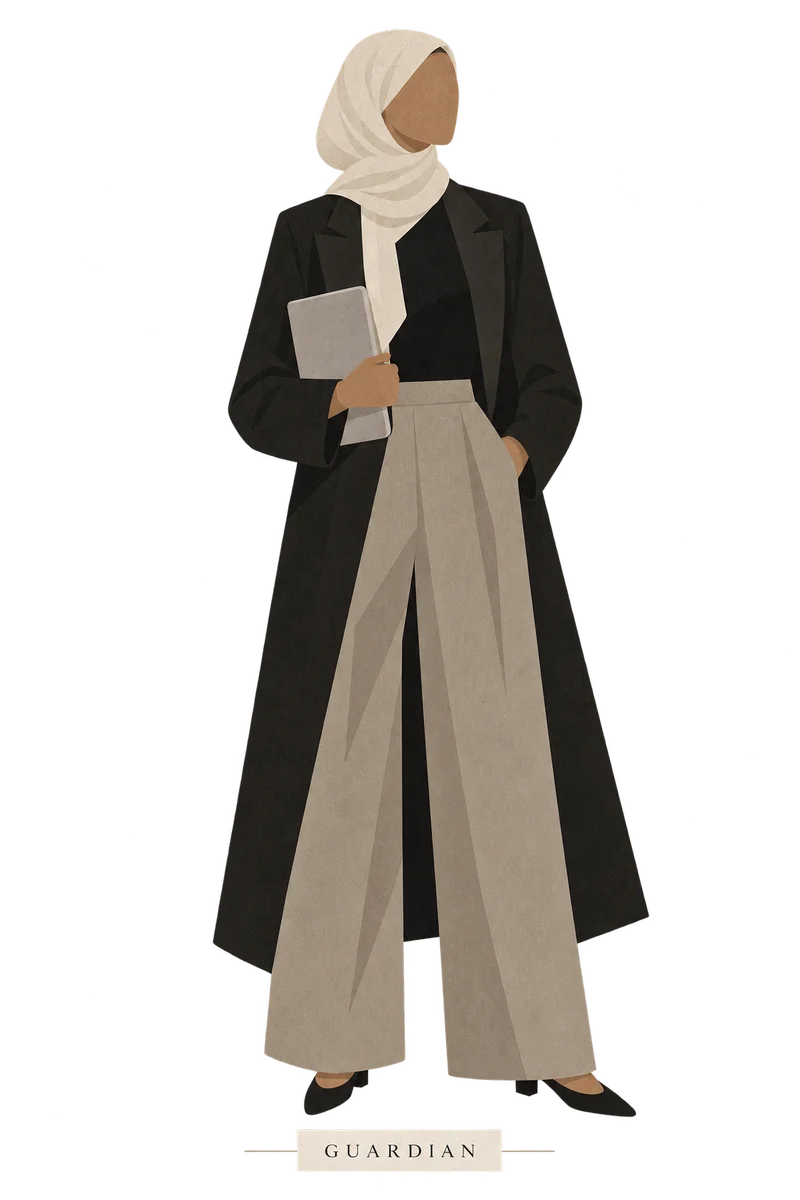
You may be a Guardian if you keep asking:
“What does this person need right now to be safer, heard or supported?”
You may notice immediate harm, safety needs, rights, urgency, who is unsupported and what a person needs now.
What you may notice first
Immediate harm, safety, rights, urgency, power imbalance, who is unsupported and what practical help is needed now.
What you may do unusually well
- Protective judgement
- Calm action under consequence
- Direct advocacy and support
- Trust-building with people under strain
- Practical navigation of complex systems
Productive difficulty
The kind of hard work that may suit you.
Consequential situations where a person needs skilled action, practical support, advocacy and presence.
What makes the effort worthwhile
Duty, protection, immediate usefulness, human dignity and preventing avoidable harm.
Costly friction
Work you may be able to do, but may not want to centre.
You may become depleted by:
- Unsupported emotional exposure
- Responsibility without power
- High-volume crisis work
- Moral injury
- Organisations that normalise preventable harm
This does not mean you cannot do those things.
It means a role built mostly around them may underuse your strongest contribution.
Career families to explore
A Guardian pattern may show up across: Community, advocacy and social impact; legal aid; community legal practice; family violence; child safety; safeguarding; crisis navigation; disability advocacy; frontline support; housing, migration and employment advocacy.
Broad pathway zones:
- Community legal practice and legal aid
- Criminal defence, duty and protection work
- Family violence, child safety and safeguarding
- Victim, witness and crisis support
- Frontline employment, migration or housing advocacy
- Direct service navigation and protective programs
The families it connects to most often: Community/frontline practice; direct service; safeguarding; duty and protection work.
The setting matters. Fit depends heavily on caseload, supervision, authority, recovery, team culture and whether the organisation addresses systemic causes rather than relying on individual sacrifice.
Role shape and progression
Likely role shapes. Frontline practitioner, duty lawyer, case advocate, safeguarding lead, practice supervisor, specialist support adviser or protective program lead.
What seniority can add or remove. Practice supervision, specialist advocacy or bounded frontline leadership may preserve purpose better than general management. Systems or reform transitions may reduce exposure while retaining impact.
The high-capability, high-cost trap
Staying in direct exposure too long because the need is real, while recovery and long-term capacity erode.
More than one pattern can be true
Common blends
- With The Advocate: stronger formal representation and conflict orientation.
- With The Facilitator: stronger trust, support and developmental communication.
- With The Reformer: direct protection is linked to systemic change.
The Guardian is organised around the person carrying immediate consequences. The Reformer is organised around changing the system or principle at scale.
How to test the pattern
Try one low-risk experiment:
Review a public service pathway. Identify what a person in distress would need to know, do or access in the first ten minutes, and where the pathway may fail them.
Notice how the work feels: your focus, learning speed, energy, frustration and desire to keep going.
The goal is not to prove that you are “a Guardian.”
It is to gather evidence about whether this type of work brings out your best.
A pattern is not a verdict
The Lejacie Professional Archetypes are reflective work patterns, not diagnoses, fixed identities or career instructions.
The full quiz is designed to consider secondary influences, practical conditions, current career stage, exposure, confidence and pathway evidence.