
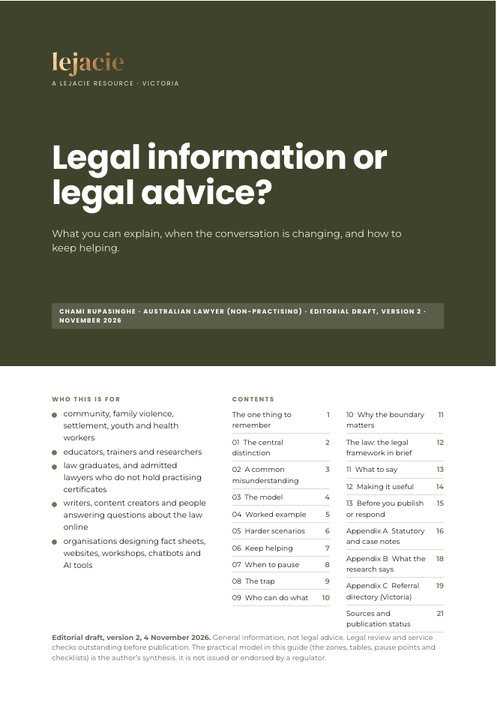
Practical resourceGuide
Legal information or legal advice?
Someone asks you a legal question. Work out what you can explain within your role, what counts as advice, and when and how to connect the person with a legal service.
Find guides, conversation tools and learning activities to help you understand your responsibilities, explain rights and options, and make next steps clearer.
Some resources are for your own practice. Others are designed to use with a client, family, colleague or team.
All resources in this collection are free to access. Check each resource for who it is for, where it applies, its sources and its sharing permissions.
General information and education, not individual legal advice.
Developed using Lejacie’s Safe to Say, Safe to Reach, Safe to Use approach. Explore how we develop and review resources.

Start with the task, then narrow by topic, your role, who you want to share it with, or format. They are different routes into the same collection.
Practical resourceGuide
Someone asks you a legal question. Work out what you can explain within your role, what counts as advice, and when and how to connect the person with a legal service.
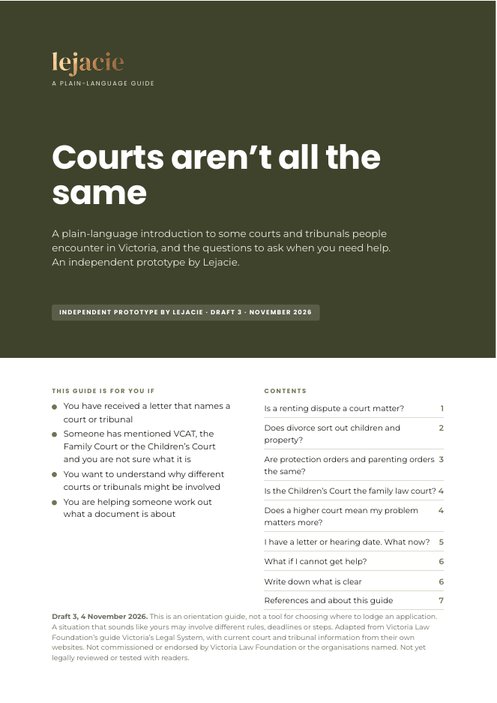
Practical resourcePlain-language guide
Make sense of the court or tribunal named in a letter: what each one deals with, what the letter is asking, and what to do before the date.
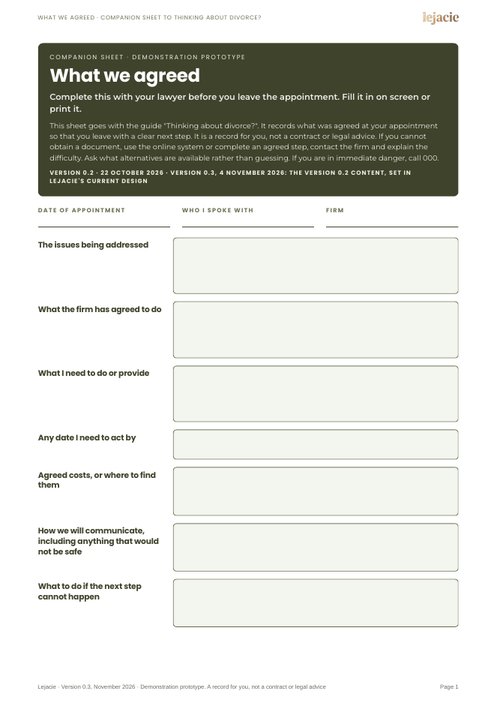
Practical resourceAppointment sheet
Record what was discussed, who will do what and what happens next. Complete it together so the person has a clear record to take away.
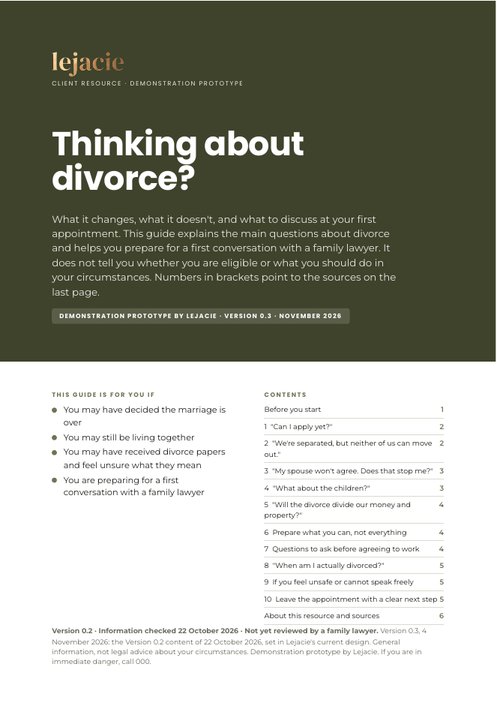
Practical resourceClient guide
What a first conversation with a family lawyer usually covers, what to bring, and the questions worth asking, so the appointment is used well.
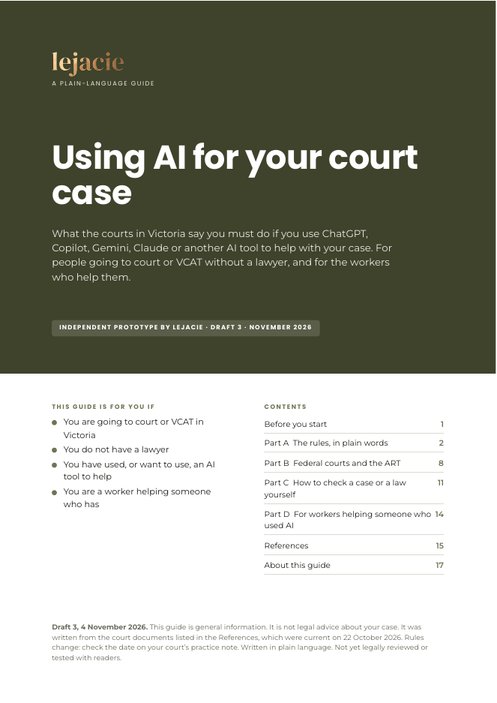
Practical resourcePlain-language guide
If you are using AI tools to prepare for court, or supporting someone who is: what the courts expect, how to check what the tool produced, and the responsibilities that stay with the person.
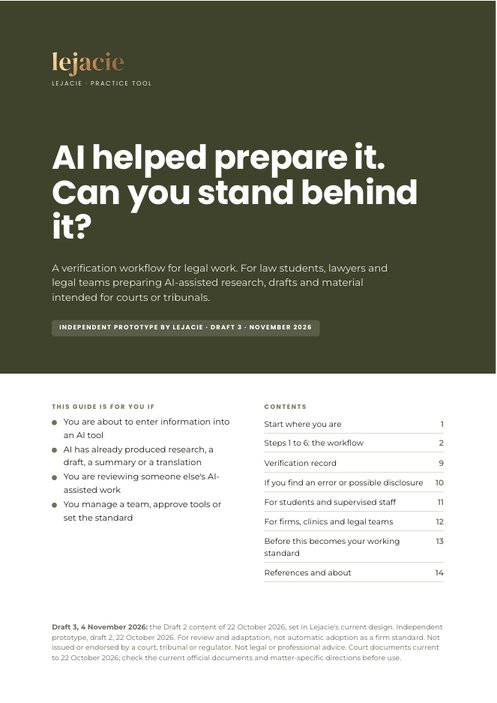
Practical resourceVerification workflow
A step-by-step check for AI-assisted legal work: what to verify, how to record it, and when to stop and start again.
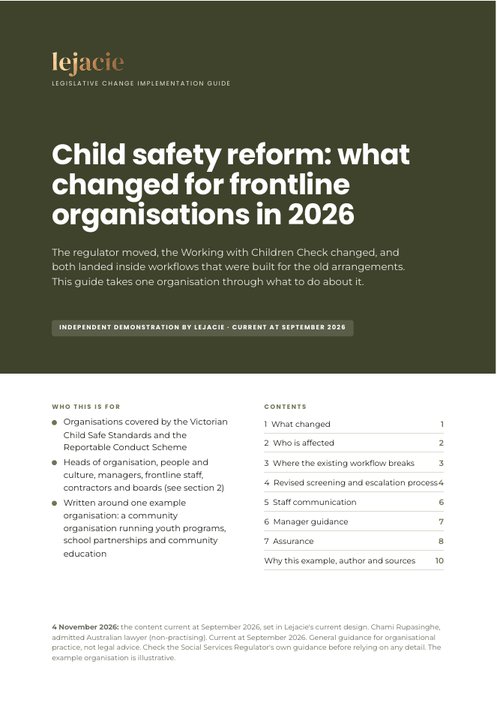
Practical resourceImplementation guide
What the 2026 move to the Social Services Regulator changed for the Child Safe Standards and Reportable Conduct Scheme, and what organisations need to check in their policies, reporting and training.
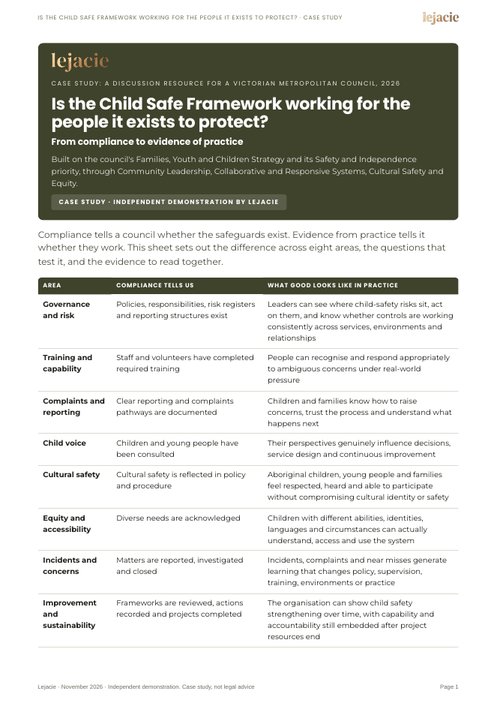
Independent demonstrationCase study
Compliance shows whether safeguards exist; evidence from practice shows whether they work. Eight areas, the questions that test each, and the evidence to read together.
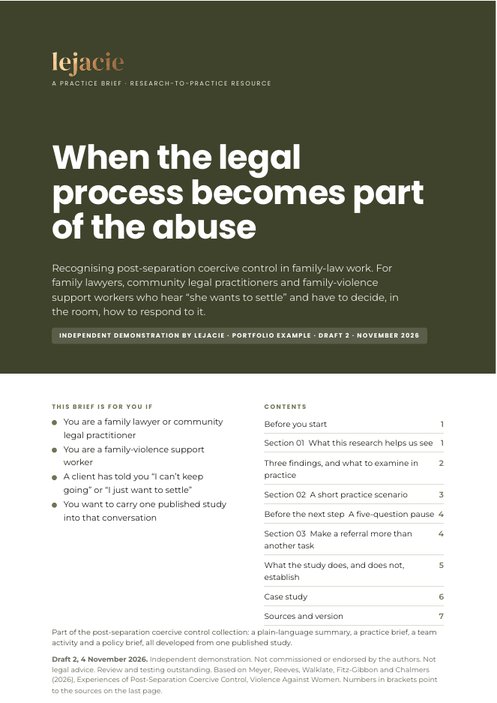
Independent demonstrationPractice brief
What one study of post-separation coercive control found about how the family law process itself can be used to control, and what that means for how lawyers and support workers respond.
Part of the post-separation coercive control collection. Explore the study and all four resources.
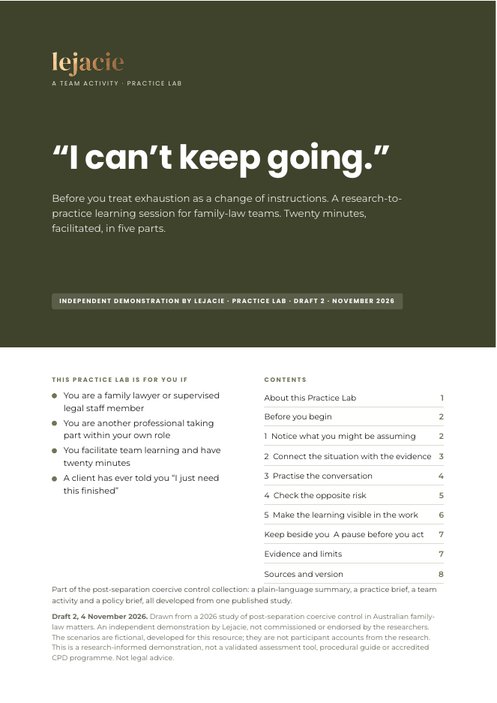
Fictional scenarioPractice Lab
A 20-minute team activity built on one scenario: a client who wants to settle because they cannot afford to continue. Notice, connect, practise, check the opposite risk, make it visible.
Part of the post-separation coercive control collection. Explore the study and all four resources.
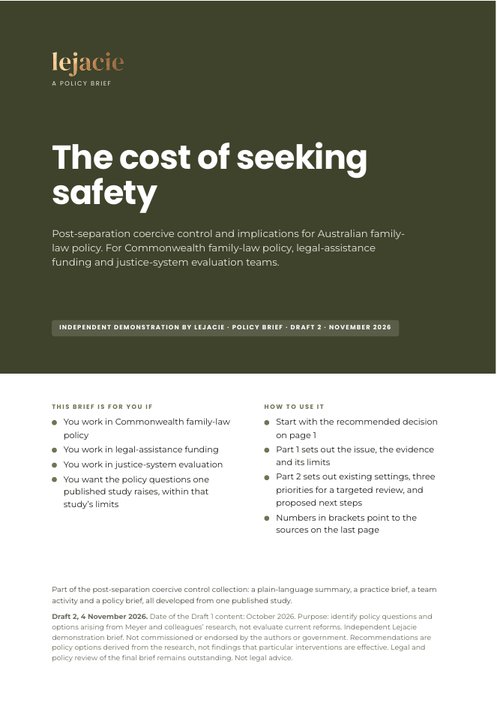
Independent demonstrationPolicy brief
The financial costs women described when leaving coercive control and going through family law, and the policy and funding questions those accounts raise.
Part of the post-separation coercive control collection. Explore the study and all four resources.
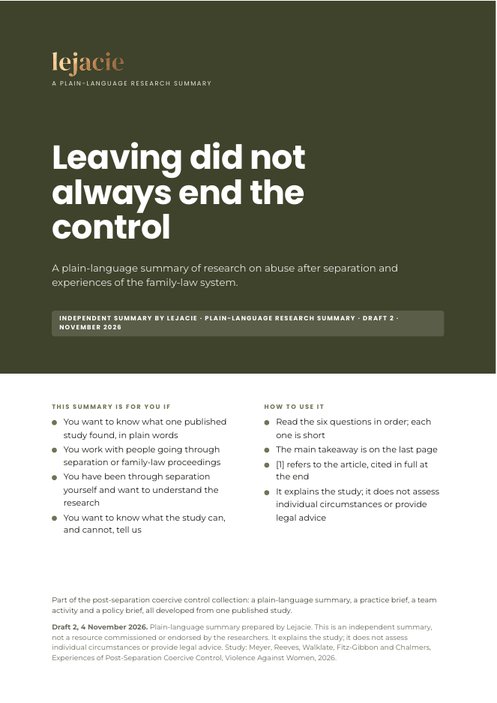
Independent demonstrationPlain-language summary
What a study of 14 women’s experiences found about control continuing after separation, written for anyone to read and share.
Part of the post-separation coercive control collection. Explore the study and all four resources.
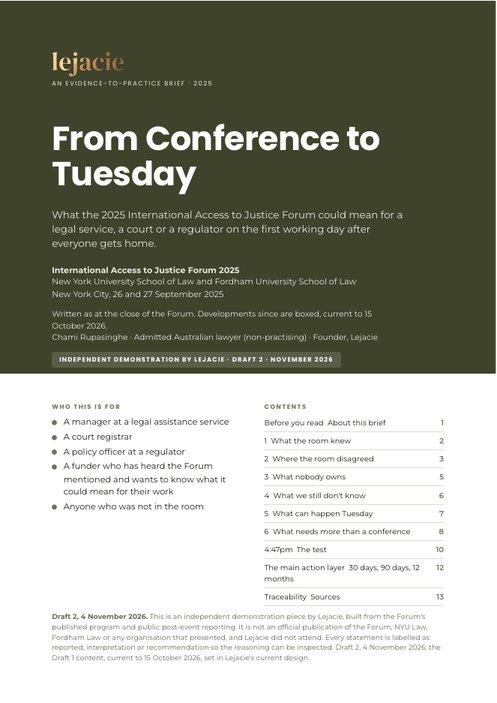
Independent demonstrationEvidence-to-practice brief
What the 2025 International Access to Justice Forum (New York, September 2025) could mean for a legal service, a court or a regulator on the first working day back: what the room agreed, where it disagreed, and what can happen on Tuesday.
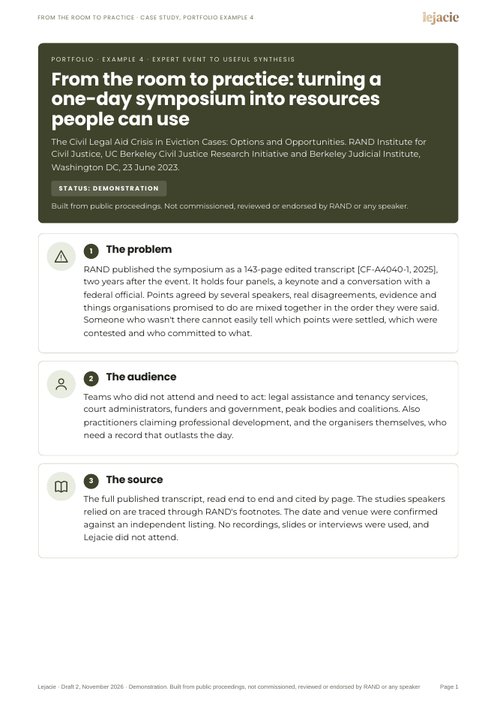
Independent demonstrationConference synthesis
A 143-page RAND symposium transcript on access to justice, synthesised into what was settled, what was contested and who committed to what, for teams that need to act on it.
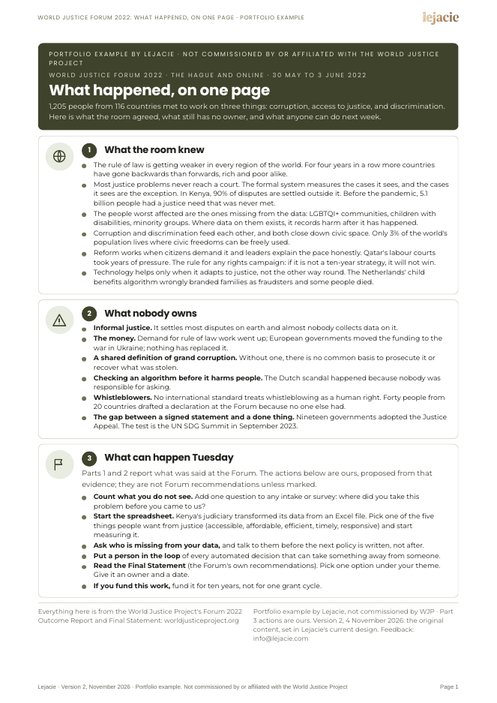
Independent demonstrationPortfolio
One global forum on corruption, access to justice and discrimination, translated onto one page for six different audiences, as an example of how event knowledge can travel.
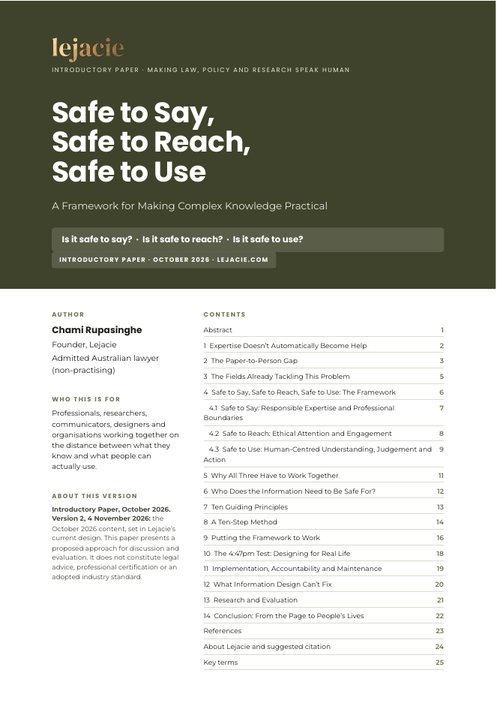
Working frameworkWorking framework
The approach behind Lejacie’s resources: how we check that public information about law, policy and rights is accurate, reaches the people who need it and helps them take a next step.
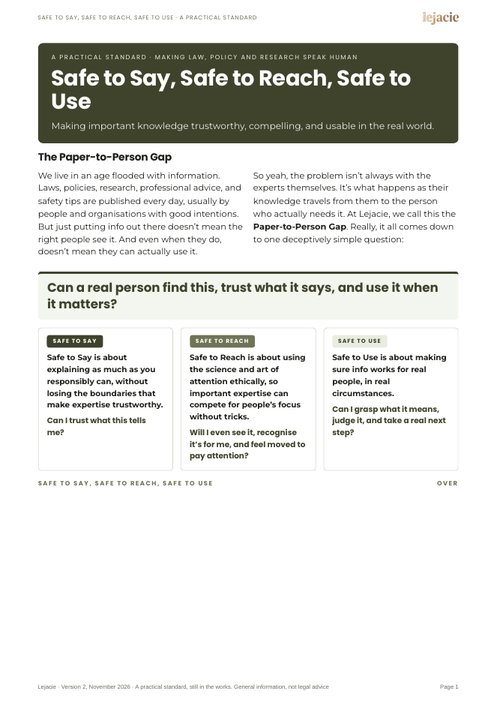
Working frameworkWorking framework
The approach on two pages, for sharing with a team or taking into a commissioning conversation.
Nothing matches those filters. Try clearing one.
Unless a resource says otherwise, you can:
Third-party material. Some resources quote or summarise research, legislation or guidance from other organisations. That material stays under its original terms and is cited in the resource.
Responsibility for adapted versions. If you adapt a resource, you are responsible for checking that the adapted version is accurate and current for your setting. Lejacie reviews its own published versions, not adaptations.
Status labels. Practical resource: made for use as it is. Independent demonstration: made by Lejacie to show a format or method, without a commission from the organisation or researchers it draws on. Fictional scenario: the people and situations are invented for learning. Working framework: Lejacie’s developing approach, open to comment.
If you want to use a resource in a way not covered here, or want an editable or accessible version, email info@lejacie.com.
After the Law is a series on what happens to a law once it leaves the page: who has to carry it, what gets lost, and what it would take to make it work. Professionals From the Future looks at the roles emerging between law, practice and design.
The library grows from what workers ask for. If you searched for a guide and it wasn’t here, that is exactly what we want to know. Please don’t include client names or sensitive personal information.
Research to Real Life turns one published study into a research-to-practice brief and a second resource for another group of people who could use the findings.
Scope, fee, review stages and timing are agreed before work begins.